

Spiritual wellbeing can mean feeling connected to your values, beliefs, relationships or a sense of purpose. For some people that includes faith, prayer or spiritual practices. For others, meaning comes through family life, creativity, nature or helping someone. There is room for different approaches.
“Strong” spiritual health does not require permanent calm or a positive response to everything. You can have meaningful beliefs and still feel anxious, sad, uncertain or worn out. Start by noticing what you need, without treating a difficult feeling as proof that you have failed.
On this page
- Notice your needs without judging yourself
- Approach guilt with care and responsibility
- Make room for difficult feelings
- Choose a small, meaningful practice
- Use chakra and aura language thoughtfully
- Try meditation without pressure
- Make affirmations believable and useful
- Write, review and choose a next step

1. Notice your needs without judging yourself
Ask what has changed in your everyday life: workload, sleep, caring responsibilities, money, health or the support available to you. These circumstances deserve attention in their own right. You do not have to find a spiritual explanation before addressing them.
When you feel stuck
Separate what you can influence from what requires time, resources or another person’s cooperation. A useful step might be asking for help with a task, checking an appointment or making room to think. A small action does not have to solve the whole situation.
When sadness or low motivation persists
Losing interest in usual activities or struggling with ordinary tasks deserves care, rather than a judgment about your beliefs. The National Institute of Mental Health’s self-care guidance describes everyday support and signs that professional help may be useful. You can speak with a healthcare professional whenever you are concerned.
When anxiety is taking up space
Anxiety is not evidence that your spirituality is lacking. Notice whether worry is affecting sleep, concentration or things you want to do, and consider asking for support. If you feel unable to stay safe, seek urgent local help. A comforting belief can sit alongside practical and professional care.
2. Approach guilt with care and responsibility
If you regret a specific action, consider whether an apology, repair or a different choice is possible and appropriate. Be specific about your responsibility without turning one mistake into a verdict about your whole character.
Some guilt comes from expectations you cannot reasonably meet, such as always being available or keeping everyone happy. Ask whose expectation you are carrying and whether it is fair. Forgiveness can be meaningful, but you do not have to rush it, restore contact or give up a boundary to be a good person.
3. Make room for difficult feelings
Anger, grief and disappointment may point to a loss, an unmet need or an arrangement that needs changing. You can notice a feeling without acting on every impulse. Being honest about a hard day does not cancel gratitude or make you a negative person.
When nothing seems appealing
Look first for ordinary needs that have been crowded out, such as rest, food, manageable demands or company you enjoy. If exhaustion or loss of interest continues, get support rather than demanding a more positive attitude from yourself.
When you feel lost
You do not need a complete life purpose before choosing something worthwhile today. Consider what matters in this season: caring for a child, learning, making something, protecting your time or reconnecting with a friend. Your priorities can change as your circumstances change.
4. Choose a small, meaningful practice
Pick something that fits your beliefs, abilities and available time. You might spend a quiet moment in prayer, listen to music, sit outside, make art or speak with someone in a community you trust. The practice can be brief and ordinary.
Connect reflection to a practical need. If you value connection, send a message to someone you want to see. If you value care, ask which household responsibility could be shared. You can protect private time without making spiritual practice another standard you must meet perfectly.
5. Use chakra and aura language thoughtfully
If chakras are part of your spiritual practice, you may find that framework helpful for reflection. You could use a theme such as expression to ask, “Is there something I want to say?” Keep the answer open; a difficult emotion is not proof of a blocked chakra or a diagnosis.
Aura imagery without blame
Some people use aura imagery to describe how they feel or the atmosphere around them. If that language is meaningful to you, use it kindly. Feeling tired does not mean you are spiritually dirty, and a missed opportunity does not establish that an aura caused it. Avoid any interpretation that pressures you to buy a solution or delay appropriate care.
6. Try meditation without pressure
If you want to try meditation, choose a comfortable position and a short period that feels manageable. You might notice sounds around you or use a familiar phrase. There is no requirement to close your eyes, empty your mind or remain still through discomfort.
The NCCIH guide to meditation and mindfulness discusses possible benefits, limits and unwanted effects. If a practice increases distress, stop or choose another activity, and seek advice when needed. Keep any healthcare or treatment you need in place; meditation is not a reason to postpone it.
7. Make affirmations believable and useful
Choose words you can accept on a difficult day. “I can ask for help” or “I can take one step before deciding the next” may feel more usable than insisting that everything is wonderful. A phrase can be a reminder rather than a promise that repeating it will change your circumstances.
Pair it with an action when possible: write down a question, make a request or take a break. If affirmations feel irritating or increase pressure, leave them out. You are allowed to prefer another way of reflecting.
8. Write, review and choose a next step
If you enjoy journaling, try three short prompts: What is weighing on me? What matters to me here? What support or action might help? Keep private notes somewhere safe, and do not force yourself to record experiences you would rather discuss with someone.
After trying a practice, ask whether it made room for care, connection or a clearer choice. If writing leaves you dwelling on distress, stop and try something else. You do not need to keep a streak or produce a positive insight every time.
Choose what you need now
Your next step might be a meaningful ritual, a shared task, a conversation or an appointment. Spiritual wellbeing can include questions and difficult days. Let your beliefs support your life while keeping room for practical help and choices that suit your circumstances.
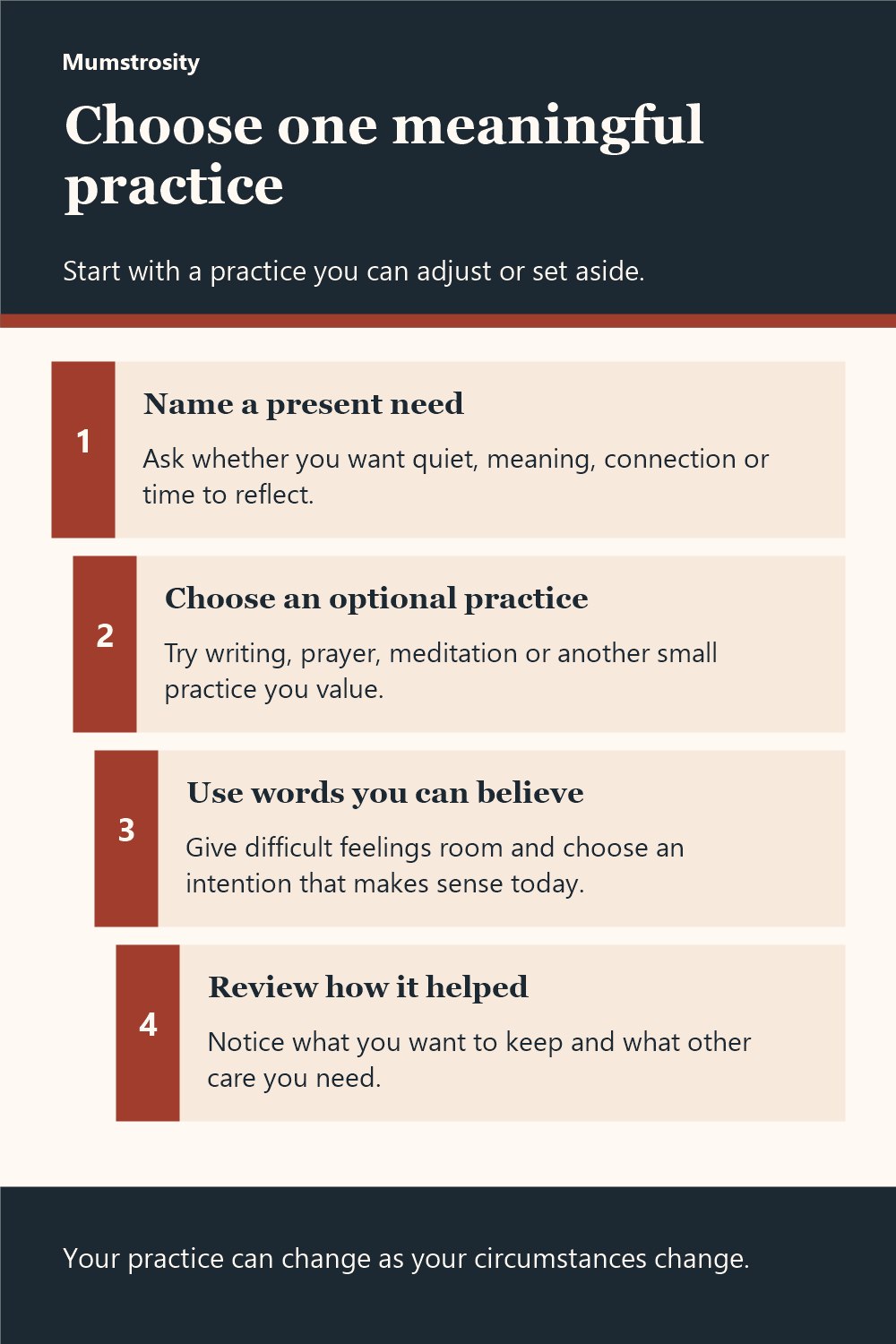
Read the infographic in text
Choose one meaningful practice Start with a practice you can adjust or set aside.
- Name a present need Ask whether you want quiet, meaning, connection or time to reflect.
- Choose an optional practice Try writing, prayer, meditation or another small practice you value.
- Use words you can believe Give difficult feelings room and choose an intention that makes sense today.
- Review how it helped Notice what you want to keep and what other care you need.
Your practice can change as your circumstances change.