

Seeing an ex unexpectedly can bring up feelings before you have decided what to do. You might feel awkward, angry, pleased, unsettled or several things at once. Your reaction does not tell you who has “won” the breakup or whether you have made enough progress.
You can choose a greeting, a brief conversation or no contact. What matters is your comfort, the circumstances and any safety concerns. A little preparation can give you options without requiring you to perform confidence for someone else.
On this page

1. Give yourself a moment to choose
If you notice your ex before they notice you, you do not have to act immediately. Consider where you are, whether you want contact and what you were there to do. You can continue your errand or move towards someone you know.
Feeling unsettled does not mean you need to prove you are calm. If it helps, notice the floor under your feet or take an ordinary pause before answering. You can also leave without waiting for the feeling to pass.
Put safety ahead of politeness
If the relationship involved threats, violence, stalking or controlling behaviour, an unexpected encounter may need a safety plan rather than small talk. Consider reaching someone you trust or staff nearby, and avoid agreeing to a private conversation because you feel pressured.
In the United States, the National Domestic Violence Hotline provides personal safety-planning information. If you are in immediate danger, contact local emergency services when you can safely do so. You do not owe an explanation before seeking help.
2. Decide what contact you want
A greeting is optional. You can nod, say hello briefly or choose not to engage. If you share a workplace, class or parenting responsibility, necessary practical contact can remain separate from a personal catch-up.
Useful short responses include: “Hello. I am on my way somewhere,” or “I do not want to talk right now.” You do not need to say that you are happy, dating someone or completely over the relationship.
Let a greeting mean only a greeting
Warmth, awkwardness or silence can have many meanings. A friendly exchange does not by itself establish regret, renewed interest or a plan to reconcile. You can acknowledge what happened without deciding what your ex secretly feels.
If they make a specific invitation, you can take time to consider it. You do not need to answer while surprised or accept simply because the interaction felt pleasant.
3. Keep conversation within your limits
Choose what you are comfortable sharing about work, family, dating or your present plans. A question does not require a detailed answer. You might say, “I am keeping that private,” or “I would rather talk about the practical arrangement by message.”
If the conversation turns towards the breakup, decide whether you want that discussion here and now. A public event or chance encounter may not suit it. You can postpone, decline or suggest another channel if a practical issue genuinely needs attention.
Keep children out of adult explanations
If children are present, focus on what they need in the moment. You can keep adult disagreements, dating questions and private history for another setting. They do not need to interpret the encounter or carry a message between you.
Where you share parenting responsibilities, follow the arrangements relevant to your circumstances. An unexpected meeting does not require you to renegotiate everything on the spot.
4. Make a workable plan to leave
You can end an ordinary conversation with a short statement: “I am going back to my friends now,” or “I need to finish my shopping.” You do not have to stay until the exchange feels comfortable or until your ex agrees with your reason.
If you expect to see each other at an event, think ahead about transport, who you can spend time with and whether you want to ask a friend for company. Choose an arrangement that fits rather than avoiding every place you enjoy.
Choose the amount of support you want
A friend can stay nearby, help you leave or listen afterwards. You can ask them not to report on your ex’s behaviour or turn the encounter into a comparison of who looked happier. Support can focus on your needs.
5. Look after what you need afterwards
You may want company, quiet, food, rest or time to think. A difficult encounter does not require a big decision about dating, forgiveness or renewed contact. Give yourself room to decide when the surprise has settled.
If you keep replaying the exchange, separate what happened from what you are guessing. “We spoke briefly” is an observation. “They must think I am miserable” is an interpretation you cannot confirm from the encounter alone.
Consider whether your plan worked and what you would prefer next time. You can adjust a boundary or seek more support without treating your reaction as a failure. Your choices can reflect the relationship as it is now and the life you want to continue.
Read the infographic in text
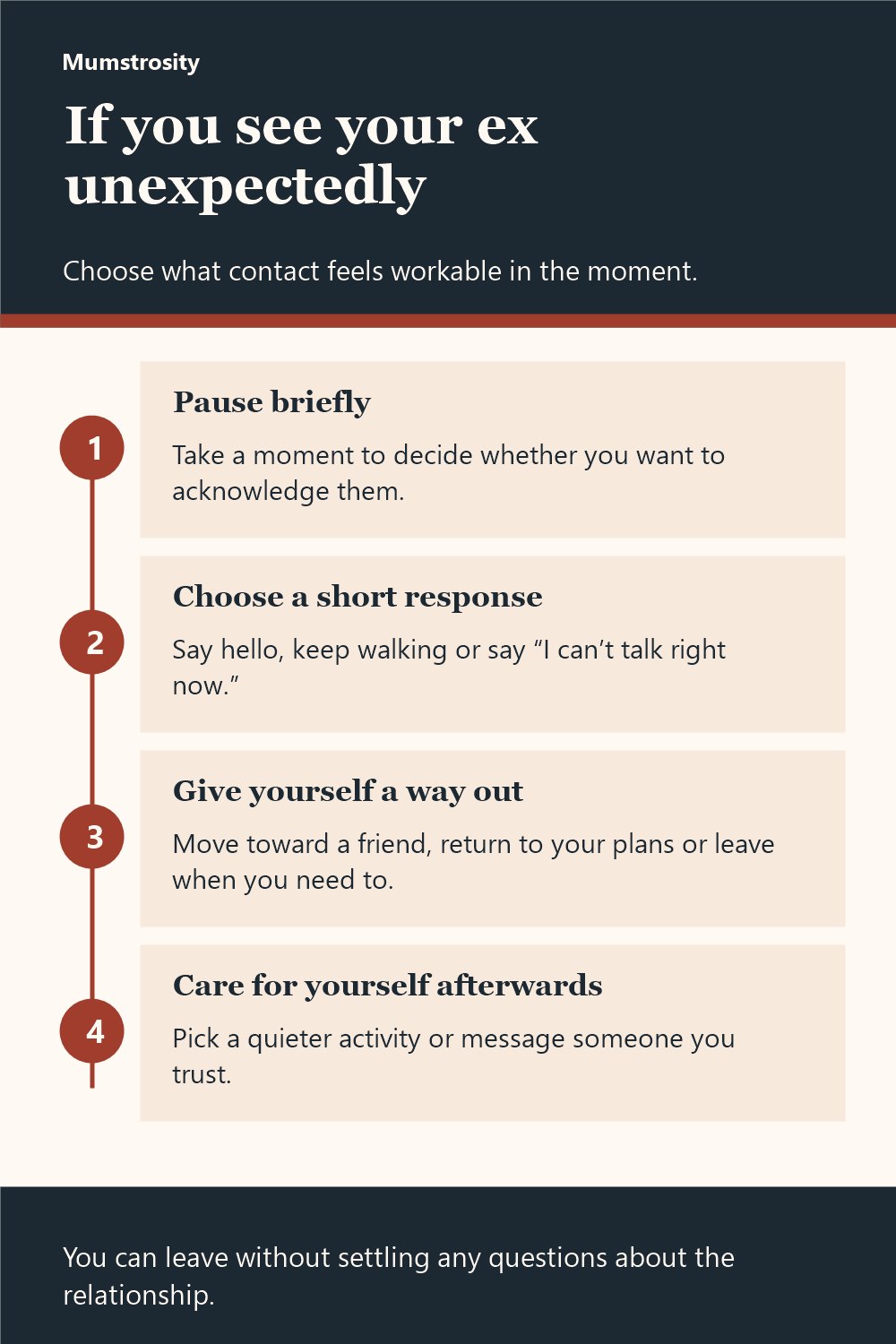
If you see your ex unexpectedly Choose what contact feels workable in the moment.
- Pause briefly Take a moment to decide whether you want to acknowledge them.
- Choose a short response Say hello, keep walking or say “I can’t talk right now.”
- Give yourself a way out Move toward a friend, return to your plans or leave when you need to.
- Care for yourself afterwards Pick a quieter activity or message someone you trust.
You can leave without settling any questions about the relationship.