

Waiting for “true love” can mean choosing a relationship you actually want rather than agreeing to one because you feel behind, lonely or under pressure. It does not need to mean waiting for a flawless person, a sign of destiny or a promise that you will be happy all the time.
You can date, take a break or enjoy being single. There is no deadline that makes one choice more worthy than another. If you want a relationship, consider the qualities you hope to share and how you would recognise them in everyday life.
On this page
Give “true love” an everyday meaning
Words such as soulmate, commitment or partnership can carry different hopes. Try turning a hope into something you can discuss. “I want someone I can rely on” might mean keeping arrangements, telling you when plans change and following through on an agreement.
Trust can develop through what you learn about one another. It does not require instant certainty, access to a phone or an explanation for every moment apart. You can ask a relevant question and decide what information you need without treating constant monitoring as proof of closeness.
Shared memories can be enjoyable without being a test of whether love is real. An ordinary evening cooking or a conversation on a walk may matter as much to you as a holiday. Ask what each of you enjoys; you do not have to turn every shared moment into an impressive experience.
Choose a pause without putting life on hold
A dating break may give you room for something else: recovering after a breakup, arranging childcare, seeing friends or simply having fewer plans. Choose the purpose that matters to you. You do not have to reach a perfect level of confidence or happiness before dating again.
If you are waiting for a particular person to become available, consider what they are offering now. “I am not ready” does not promise a future relationship. You can ask for clarity, decide what contact you want and make plans that do not depend on their changing their mind.
You can care about someone without thinking about them all day or putting their wishes ahead of every other responsibility. Try reserving time for a part of your life you want to keep: a weekly activity, an unhurried morning or a visit with a friend. A relationship can have room for both connection and separate time.
Notice care while keeping other connections
A partner may also be a close friend, but one person does not have to become your only source of support. You can choose which thoughts to share, keep private conversations private and maintain friendships of your own. Not telling each other everything is not automatically a sign that something is wrong.
Look for care you can describe. Did they ask what you wanted before making a plan? Could you say you were tired without being punished for it? Did they listen when you explained a limit? Consider the pattern over time rather than treating a single romantic gesture as a guarantee.
Approval from friends or family can feel reassuring, and concerns from trusted people may be worth hearing. Neither decides the relationship for you. Ask for specific observations, compare them with your experience and keep your own wishes in view.
Discuss the support you can each offer
“Be there for me” can mean listening for ten minutes, helping with an agreed task or making time for a difficult conversation. Ask for the support you want and check what is possible. Someone can care and still be unavailable at a particular moment.
You might say, “I have had a difficult day. Could we talk this evening, or would tomorrow work better?” In return, be honest about your own capacity. Love is respect’s guide to boundaries and expectations offers a useful starting point for talking about what each person wants and finds comfortable.
Support does not mean agreeing with everything or defending harmful behaviour. You can acknowledge a feeling while taking responsibility for your own actions. A clear limit or a request for change can belong in a caring relationship.
Leave room to reconsider
You may discover that you want different futures, cannot agree on the relationship or no longer wish to continue. That does not make your earlier affection false. Staying, slowing down or leaving are choices to consider from what is happening now, rather than from a promise that love should overcome everything.
If saying no leads to threats, intimidation or attempts to control your contact with others, take that seriously. You can seek support without first having a confrontation. A relationship label never requires accepting harm.
For your next step, choose one question to explore or one plan of your own to keep. Hope for a relationship can sit alongside a full life today. Waiting is an option you can reconsider, not a requirement to earn love.
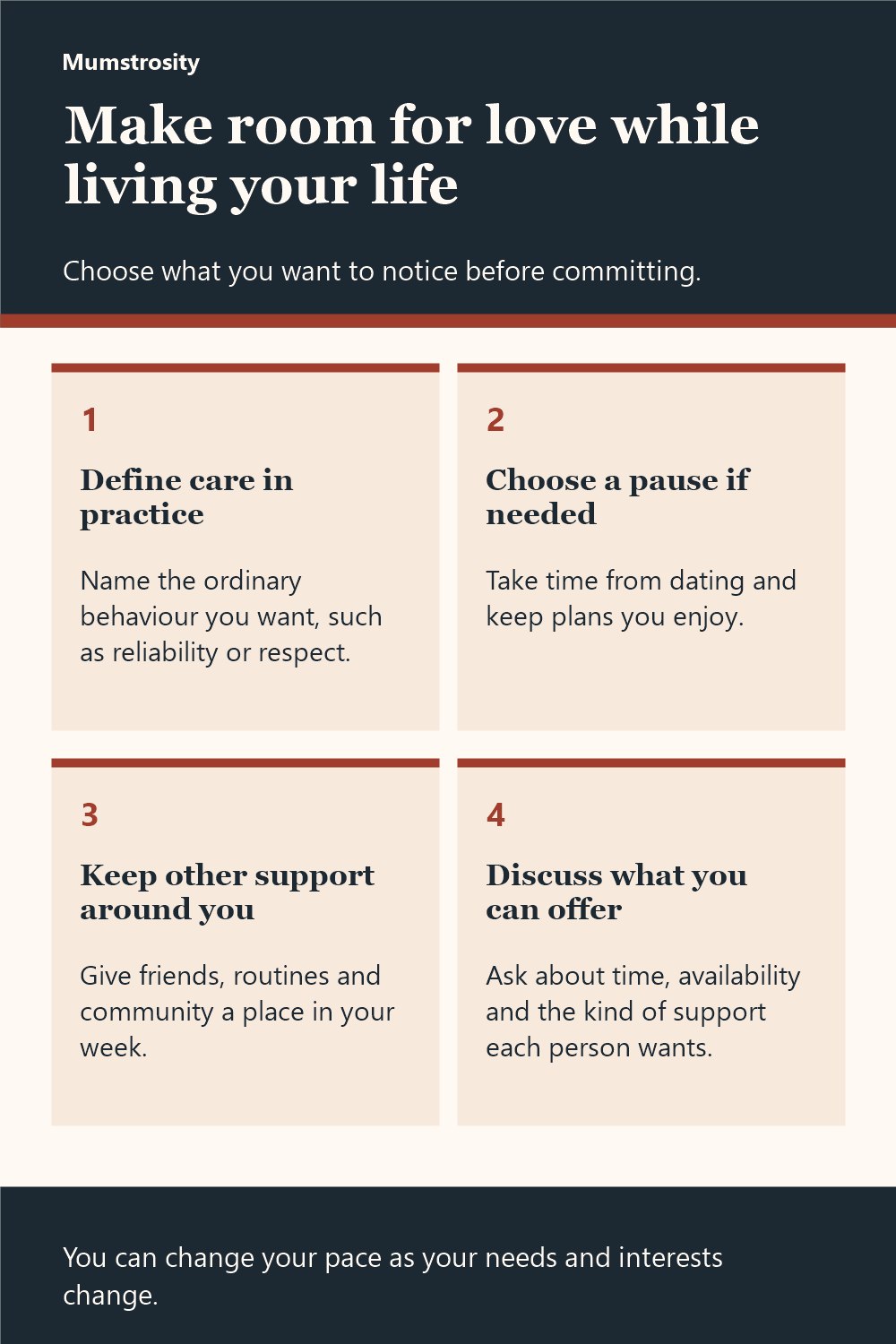
Read the infographic in text
Make room for love while living your life Choose what you want to notice before committing.
- Define care in practice Name the ordinary behaviour you want, such as reliability or respect.
- Choose a pause if needed Take time from dating and keep plans you enjoy.
- Keep other support around you Give friends, routines and community a place in your week.
- Discuss what you can offer Ask about time, availability and the kind of support each person wants.
You can change your pace as your needs and interests change.