

A wedding can bring excitement alongside worry. You might feel overwhelmed by the event, uncertain about a practical decision or concerned about the relationship itself. None of those feelings needs to be dismissed because other people expect you to be happy.
Rather than asking whether your nerves are normal enough to ignore, identify what the worry is about and what information or support would help. You can look forward to a wedding and still take a concern seriously.
On this page
1. Put the worry into a specific sentence
Try completing: “I am worried that…” You might be concerned about attention from guests, the cost of a plan, sharing responsibilities after marriage, or how your partner responds when you disagree. Different worries may need different responses.
You do not have to sort everything into a tidy category. Planning pressure and relationship concerns can overlap. Writing a few concrete examples may make the next conversation easier.
2. Reduce pressure around the event where you can
Consider which decisions matter to you and which expectations you would like to simplify. You might reduce the number of tasks, delegate something to a willing trusted person or set aside time when wedding planning is off the agenda.
Discuss these changes with the people affected rather than assuming you must carry every detail alone. A celebration does not need to satisfy every preference to reflect what you and your partner want.
3. Discuss ordinary life beyond the wedding day
Make time for practical questions: how you want to share tasks, spend time with relatives, manage shared responsibilities and approach future plans. Discuss whether you want children, where you want to live or other choices that matter to either of you.
The aim is not to agree on everything in one sitting. Notice whether both people can ask questions, explain a limit and have a different view without being pressured to drop it. Our guide to asking for what you need gives examples of specific, manageable requests.
4. Give recurring relationship concerns their own attention
If you are worried about honesty, compatibility, repeated hurt or feeling unable to be yourself, set aside a conversation about that issue. A completed guest list or a pleasant planning appointment does not resolve a separate concern about the relationship.
You may want time to think, an independent person to talk with or a particular change before deciding what comes next. Do not treat the wedding date as proof that you must already have an answer.
5. Notice whether your decision feels freely chosen
Other people may have invested time, money or hopes in the wedding. Their feelings can matter without deciding whether you want to marry. You can consider postponing, changing plans or ending the relationship even when explaining that decision feels difficult.
Love is respect’s guide to boundaries describes being able to express needs and limits without fear. If you are afraid of threats, control or retaliation, seek private support from a trusted person or domestic abuse service before arranging a confrontation.
6. Choose one next step and leave room to reassess
A next step might be a conversation with your partner, a simpler event plan, private support or time away from planning. Be clear about what you need to understand rather than promising that a conversation will remove every doubt.
If you decide to change arrangements, make a practical list of people and bookings to contact. A trusted person may help with those tasks. You do not need to deliver every explanation at once.
Your wedding plans should leave room for your actual wishes and concerns. Proceeding, pausing or changing direction is a decision to make with attention to your circumstances, rather than a test of whether you can suppress worry.
Read the infographic in text
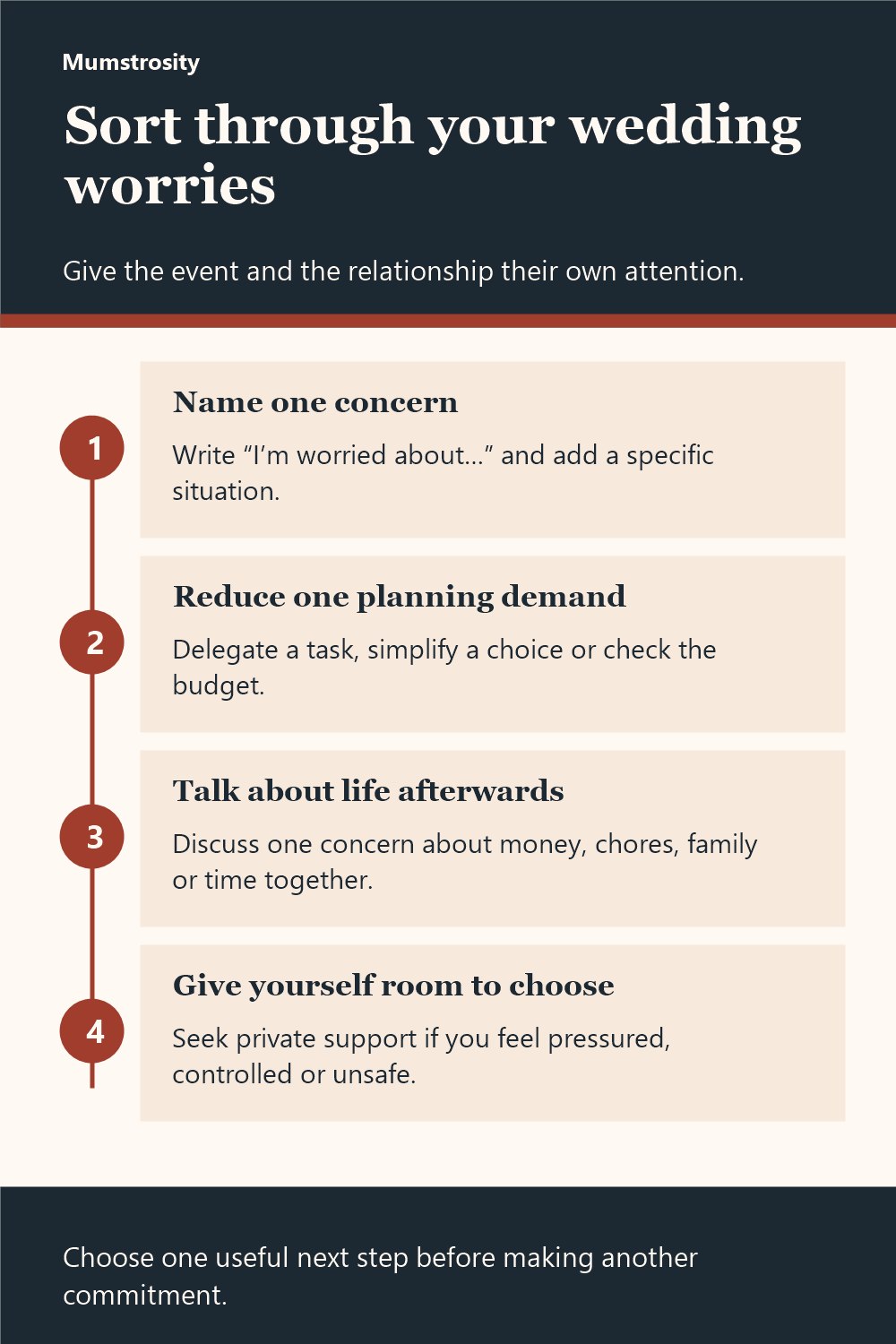
Sort through your wedding worries Give the event and the relationship their own attention.
- Name one concern Write “I’m worried about…” and add a specific situation.
- Reduce one planning demand Delegate a task, simplify a choice or check the budget.
- Talk about life afterwards Discuss one concern about money, chores, family or time together.
- Give yourself room to choose Seek private support if you feel pressured, controlled or unsafe.
Choose one useful next step before making another commitment.