

Falling in love can bring curiosity, excitement, uncertainty or a quieter feeling of connection. You may want to understand a new attraction without knowing yet what the other person wants. Use these ten prompts in any order to reflect on your experience and the choices available to you.
Give attention to how you are treated as well as how strongly you feel. You can enjoy a connection, ask a clear question, slow down or decide that it does not suit you. A particular feeling does not create an obligation to date, share private information or become intimate.
On this page

1. Curiosity beyond friendship
You may notice that you want a date, a different kind of closeness or simply more time together. Ask yourself which of those you mean. If you want to explore dating, a clear invitation can be more useful than testing whether the other person recognises hints. Leave room for them to want something different.
2. Thinking about the person often
You might replay a conversation or look forward to seeing them. Keep room for rest, work and interests of your own too. How much someone occupies your thoughts cannot tell you whether feelings are mutual. If the preoccupation is distressing or makes daily life difficult, consider asking for support rather than treating lost sleep or constant checking as proof of love.
3. Admiration alongside a fuller picture
Notice what you appreciate and allow time to learn more. You may like someone’s humour, warmth or interests while still needing to understand how they handle disagreement or respect a limit. If the connection has spiritual meaning for you, that meaning can sit alongside ordinary questions about care, compatibility and choice.
4. Nervousness or uncertainty
You may wonder what a delayed message means or worry about saying the wrong thing. Ask a manageable question about contact or plans instead of trying to read someone’s mind. You do not need to perform perfect confidence to deserve a respectful answer. A person’s pace or communication style may differ from yours.
5. Growing closeness at your own pace
Closeness can involve conversation, shared activities, affection or personal information. Choose what you want to share and ask what the other person is comfortable with. More time together does not create a requirement for sex, disclosure or exclusivity. You can change your mind about a boundary even after previously agreeing to something.
6. Enjoying ordinary time together
You may feel excited about a date or comfortable doing something simple together. Both experiences can be worth noticing. A connection can include quiet days, practical limits and interests you do separately. You do not have to be constantly exhilarated, and a happy evening cannot settle every question about the relationship.
7. Wanting time to think
If the pace feels too fast or your feelings are unclear, describe the space you need. “I would like a quiet weekend and to talk on Monday” gives a clearer picture than disappearing to test whether someone pursues you. You can reflect without promising a particular answer afterward, and the other person can decide whether the arrangement works for them.
8. Noticing jealousy without handing it control
A jealous feeling may prompt a question about expectations, reassurance or a broken agreement. It does not justify monitoring messages or restricting friendships. Our guide to jealous feelings, boundaries and choices offers ways to separate what happened from what you fear it means, and to notice controlling behaviour.
9. Choosing what you want from the connection
Consider whether you want friendship, casual dating, a committed relationship or more time to decide. Ask what the other person wants too. Strong attraction can coexist with different plans. You can recognise the connection’s value while deciding that the available arrangement does not meet a need that matters to you.
10. Talking about shared expectations
Discuss what dating, exclusivity or commitment means to each of you rather than assuming a label settles it. Love is respect’s dating definitions and questions can help start that conversation. Agree on what you are choosing now, leaving room for later questions or changes.
You can say you love someone when you want to, without a required date or pressure for an identical response. Continue noticing whether you can be yourself, keep supportive connections and make decisions freely. Those everyday choices deserve attention throughout a relationship.
Notice what an ordinary plan adds to a strong feeling
When you’re excited to see someone, choose an activity you both actually enjoy. Pay attention to small choices such as how they respond if you need to change the time or want to go home sooner.
You can enjoy the early feeling and give yourself time to see what grows. If you have different ideas about the relationship, talk about one difference that affects the next step.
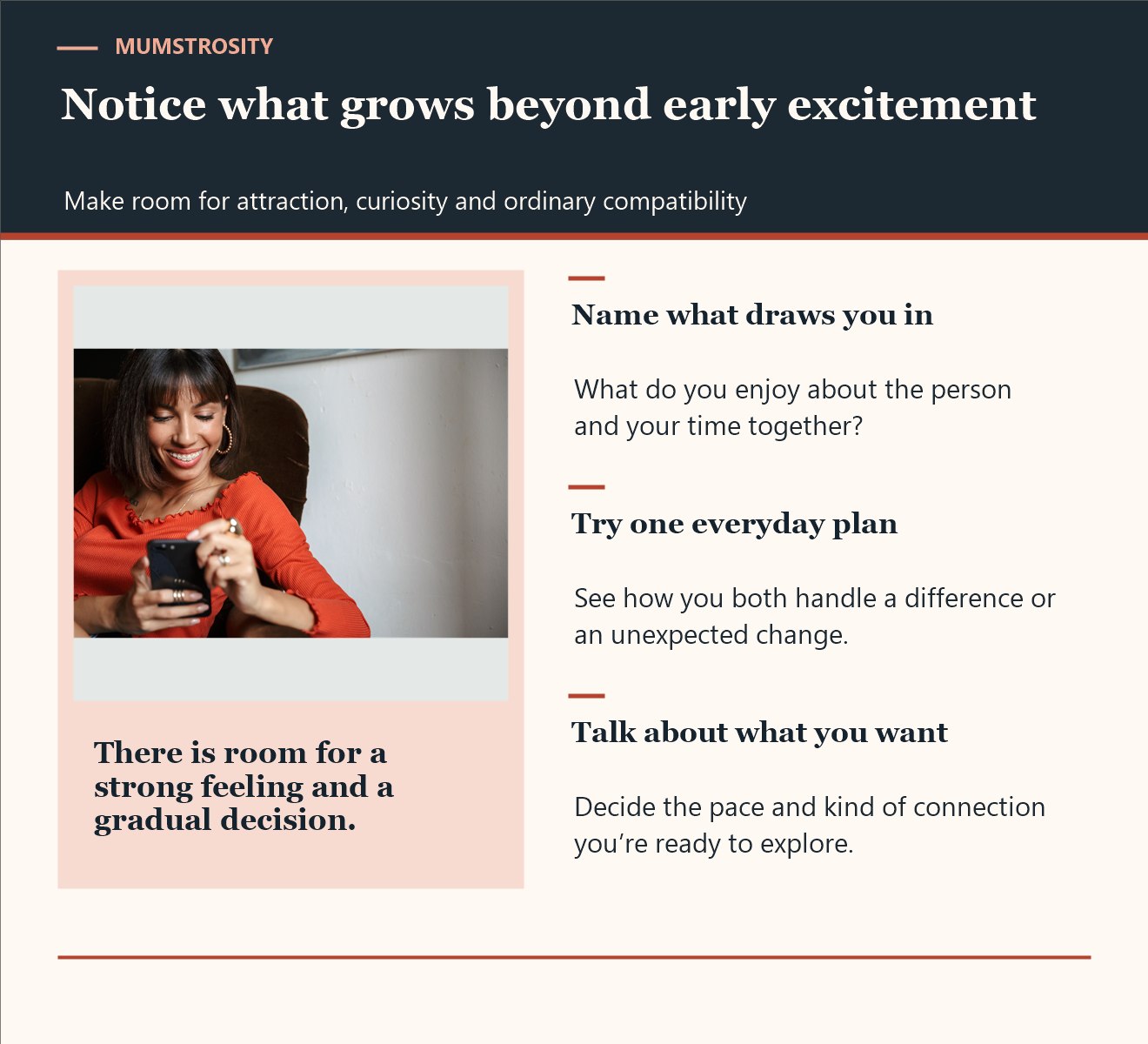
Read the infographic in text
Notice what grows beyond early excitement
Make room for attraction, curiosity and ordinary compatibility
- Name what draws you in What do you enjoy about the person and your time together?
- Try one everyday plan See how you both handle a difference or an unexpected change.
- Talk about what you want Decide the pace and kind of connection you’re ready to explore.
There is room for a strong feeling and a gradual decision.