

Thinking about getting back together with an ex can bring hope, loneliness, affection and uncertainty at once. Before making contact, consider whether contact would be welcome and whether you both want to explore a different relationship from the one that ended.
You can reflect on your part, care for yourself and change harmful behaviour without receiving another chance. The other person has the same freedom to choose. These five questions can help you decide what to do next without making reconciliation depend on a new appearance or a way to persuade someone.
On this page

1. Would contact be welcome?
Respect a request for no contact. Do not bypass a block, use another account or recruit friends to carry messages. Missing someone does not give you permission to enter their life in a way they have declined.
If contact is welcome, a single clear invitation can leave room for either answer: “Would you be open to a conversation about whether we want to reconnect?” A polite reply, practical conversation or friendly meeting does not establish romantic interest. Accept a no or a lack of response without repeated persuasion.
2. What ended the relationship, and what has changed?
Consider the actual issue: incompatible plans, unreliable contact, broken trust, practical distance or something else. Missing enjoyable moments does not answer whether that issue has changed. Look for concrete actions and workable circumstances alongside apologies or promises.
If you caused harm, take responsibility without making an apology a request for access. Your work on your behaviour can continue independently of the person’s decision. If you were hurt, you do not have to offer another chance to show that you have forgiven or recovered.
Love is respect’s guide to on-again, off-again relationships offers questions about recurring breakups and the level of trust, communication and respect. Consider the repeated pattern instead of relying only on the relief of getting back together.
3. Do both people want to explore a relationship?
Ask directly what reconnecting would mean. One person may want friendship, another romance and another only to settle a practical matter. You do not have to agree to friendship while secretly waiting for it to become a partnership.
You might say, “I am interested in considering a relationship again, but I would like to understand what you want.” Leave room to think and respond honestly. Agreeing to one conversation or a date does not require either person to promise a future.
4. What would a workable plan involve?
If you both want to try, discuss the pace, contact, privacy and responsibilities that would make the arrangement manageable. Keep plans within your time, access needs and budget. A short meeting in a comfortable public setting can give you room to talk without the pressure of an elaborate romantic gesture.
Address the reason you separated rather than avoiding it to keep the atmosphere pleasant. Where trust was broken, consider accountability and boundaries while rebuilding trust. You can agree on a practical change and a point to review it without promising that particular feelings will return.
If fear, threats, stalking or control are involved, seek individual safety support before arranging a meeting or trying joint relationship exercises. Reconciliation is not something you need to attempt to prove that you were fair.
5. Can I respect the answer and care for myself?
A clear no can hurt. Take space if you need it, and seek support that does not depend on continuing contact with your ex. Keep practical arrangements about shared responsibilities separate from requests to restart the romance.
Care for your appearance, interests or routines in ways you want for yourself. You do not need to lose weight, buy new clothes or become endlessly confident to deserve care. Whether you reconnect or move forward separately, your next step can respect both people’s wishes.
Compare a change in circumstances with a wish for another try
If you broke up because your schedules left one person doing all the work, find out whether that situation is different now. If your plan depends on changes that neither of you has discussed, pause before assuming you’ve solved it.
If contact would be welcome, you can ask whether they are open to one conversation. If they declined or asked for distance, respect the answer and seek support for yourself if you need it.
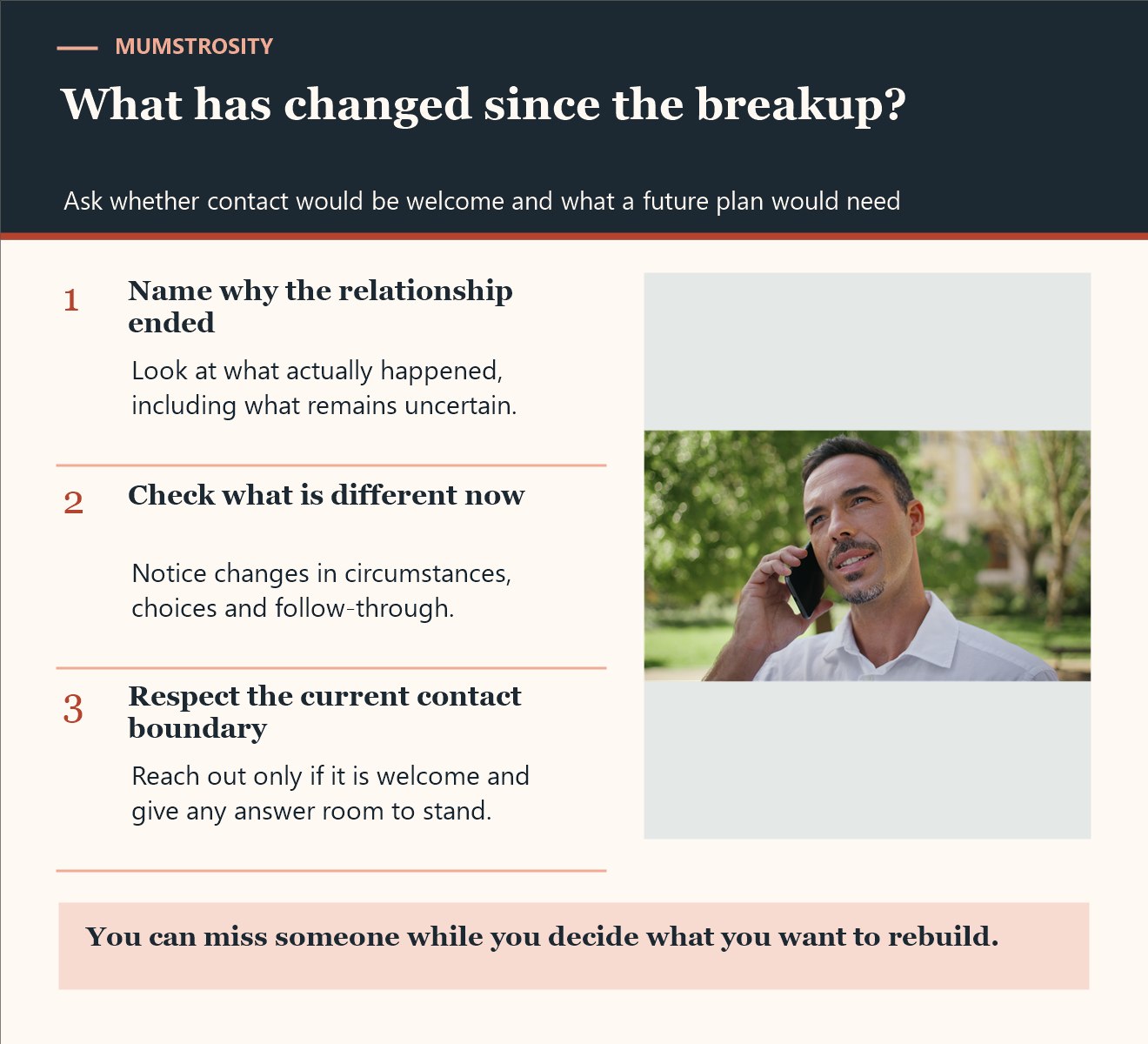
Read the infographic in text
What has changed since the breakup?
Ask whether contact would be welcome and what a future plan would need
- Name why the relationship ended Look at what actually happened, including what remains uncertain.
- Check what is different now Notice changes in circumstances, choices and follow-through.
- Respect the current contact boundary Reach out only if it is welcome and give any answer room to stand.
You can miss someone while you decide what you want to rebuild.