

A relationship can feel different as you get to know each other. You may become more relaxed, discover new preferences or start considering a shared future. Those changes can be welcome, but they do not follow one timetable or mean the same thing to everyone.
Taking a relationship forward starts with asking what each of you wants. Comfortable routines, affection and time together can support that conversation without replacing it.
On this page
1. Say what moving forward means to you
For one person, the next step might be exclusivity. For another, it could mean meeting friends, spending more time together or discussing whether to share a home. Explain the change you are considering rather than assuming a label has a shared meaning.
Becoming comfortable may change how you prepare for a date or what you enjoy doing together. Neither dressing casually nor making a special effort tells you how serious someone feels. Ask what helps both of you feel welcome and appreciated.
2. Make ordinary time together something you both choose
A quiet evening can be as enjoyable as a carefully planned outing when it suits both people. Check whether your routine still leaves room for the activities and conversations you each want. Familiarity does not have to mean that one person always makes the arrangements.
Comfort also leaves room for a refusal. Being together for a long time does not create permission to use a partner’s belongings, enter their private space or expect physical intimacy. Ask about changes instead of treating a previous agreement as permanent access.
3. Notice care alongside attraction
Your understanding of someone can grow beyond an early impression. Notice how they respond when plans change, when you need help or when you disagree. You can appreciate familiar qualities while still deciding whether the relationship works for you now.
If attraction or affection changes, describe your experience without making it a verdict on your partner’s worth. You do not have to perform enthusiasm, and they do not have to guess what you are feeling. Consider what kind of closeness each of you wants.
4. Keep communication specific as life changes
Long familiarity does not make either person a mind reader. Say what you need now: an uninterrupted conversation, help with a task or a different contact routine. Check the other person’s understanding and what they can realistically agree to.
Talk about which occasions matter to you too. Remembering a date is not the only way to show care, but repeatedly dismissing something you have said is important deserves a conversation. An agreed reminder or a simpler celebration may work better than an unspoken test.
5. Protect personal space and free choices
Sharing more of your life does not mean giving up friendships, privacy or independent interests. love is respect’s guidance on boundaries explains that limits can change and should reflect your own choices rather than pressure.
Disagreements may still happen. Notice whether you can raise a concern without insults, threats or punishment. A request for a calmer conversation can be reasonable; repeatedly silencing a partner’s concerns is something different. Feeling familiar with a conflict does not make it harmless.
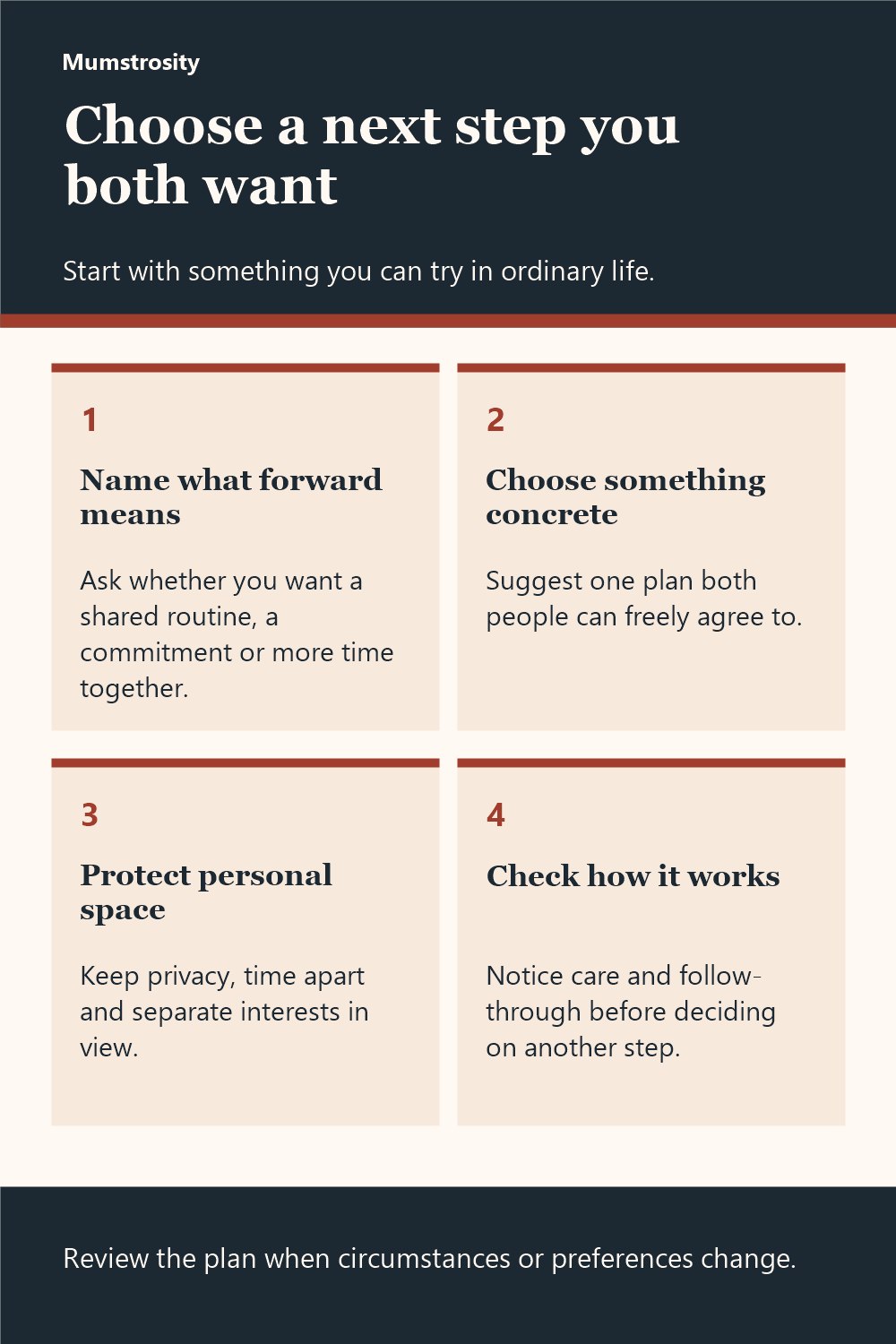
6. Choose a next step you both want
Before making a larger commitment, discuss what it would involve in everyday life. Consider time, responsibilities, money, privacy and what would happen if either person wanted to reconsider. A decision deserves more than the hope that practical differences will sort themselves out.
You can take more time, decide on a smaller change or discover that your plans differ. A useful next step makes the agreement clearer and leaves both people able to choose. It does not require proving that your relationship is progressing faster than anyone else’s.
Read the infographic in text
Choose a next step you both want Start with something you can try in ordinary life.
- Name what forward means Ask whether you want a shared routine, a commitment or more time together.
- Choose something concrete Suggest one plan both people can freely agree to.
- Protect personal space Keep privacy, time apart and separate interests in view.
- Check how it works Notice care and follow-through before deciding on another step.
Review the plan when circumstances or preferences change.