

A partner who seems distant can leave you wondering whether they are unhappy with the relationship. Less conversation, changed plans or less physical affection may be worth discussing, but none of these tells you another person’s feelings with certainty.
Start with what you have noticed and how it affects you. You can ask for clarity without collecting proof that your partner has stopped caring. Your own experience of the relationship matters, too.
On this page
1. Describe the change before explaining it
Try separating an observation from a conclusion. “We have cancelled our last three evenings together” describes something you can discuss. “You do not love me anymore” guesses at the reason. Work, tiredness, private concerns or a difference in expectations may be part of the picture; you do not have to diagnose the cause yourself.
Notice whether this is a recent change, an occasional difficulty or a pattern that keeps returning. Keep the purpose practical: understanding your experience, rather than monitoring your partner’s movements or checking their accounts.
2. Choose a clear, manageable conversation
If talking feels safe, ask for a time when neither of you is rushing. Start with one example and one question: “We haven’t had much time together lately, and I miss it. How have you been feeling about us?” Let the answer be different from what you expected.
You can explain what you need without demanding an immediate declaration about the whole relationship. If now is a difficult time, ask when you can return to it. Repeatedly postponing a conversation without an alternative is also information about what is currently available to you.
3. Discuss closeness without creating an obligation
A change in sex, touch or affection is not a reliable test of love. People may want different kinds or amounts of closeness, and nobody owes sexual activity to reassure a partner. Ask what feels welcome and share what you miss without treating a no as a failure.
You might want more conversation, a walk together or affection that does not lead to sex. A practical discussion leaves room for both people’s limits. It should not become a bargain in which one person must accept unwanted intimacy to keep the peace.
4. Notice the response and the follow-through
Listen to what your partner says, then consider how you both act afterward. Can you acknowledge the issue without ridicule or blame? Is there a specific change you both want to try? For example, you might arrange one evening together or agree to give earlier notice when plans change.
Check whether the arrangement works in ordinary life. You do not need to demand perfect behaviour, but an apology without any follow-through may leave the original problem in place. Your partner’s explanation and your disappointment can both matter.
5. Include your own wishes in the decision
You may spend so much time asking whether your partner is happy that you overlook whether the relationship works for you. Consider whether you feel heard, whether effort is shared and whether the compromises are ones you freely want to make.
You can care about someone and still find that your needs or plans are incompatible. If you are deciding whether to try again, consider what another chance would actually involve. You do not have to wait for a partner to announce that the relationship is over before reassessing your own choice.
6. Distinguish distance from intimidation or control
Being distracted or wanting time alone is different from threats, humiliation, coercion or attempts to control your choices. Unhappiness does not excuse those actions. The National Domestic Violence Hotline’s warning signs of abuse can help you recognise behaviours that deserve attention beyond an ordinary relationship conversation.
If you fear your partner’s response, seek private support from a trusted person or domestic abuse service before arranging a confrontation. In immediate danger, contact local emergency services if you can do so safely. You can take your concerns seriously without proving what someone else feels.
Read the infographic in text
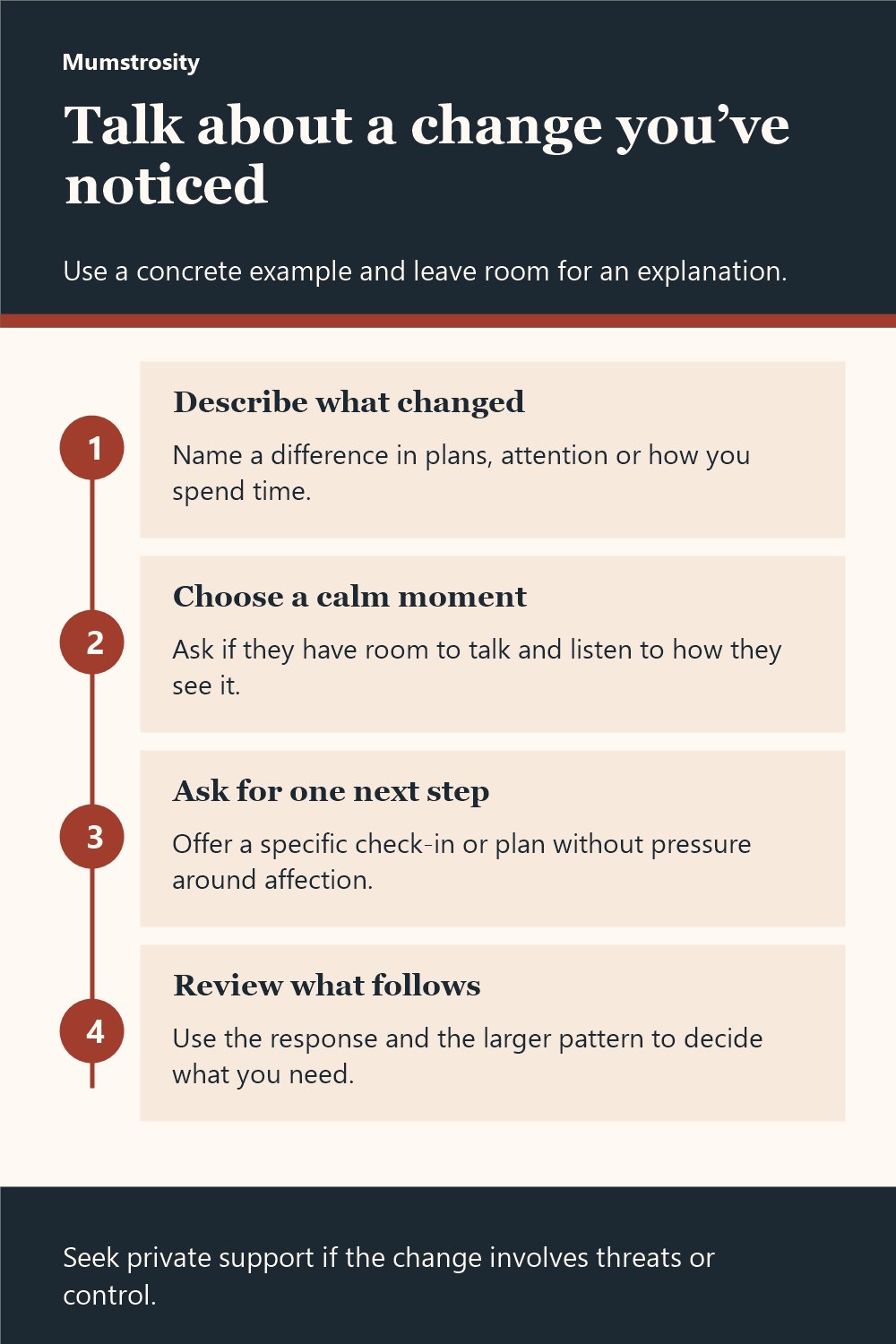
Talk about a change you’ve noticed Use a concrete example and leave room for an explanation.
- Describe what changed Name a difference in plans, attention or how you spend time.
- Choose a calm moment Ask if they have room to talk and listen to how they see it.
- Ask for one next step Offer a specific check-in or plan without pressure around affection.
- Review what follows Use the response and the larger pattern to decide what you need.
Seek private support if the change involves threats or control.