

A list of qualities you want in a partner can help you think about what matters. It can also become so detailed that it leaves little room to discover how a real relationship feels. You do not have to choose between abandoning your standards and treating every date as an examination.
Start with the kind of relationship you want, then consider which preferences are flexible and which limits you want to keep. The aim is a choice that suits both people, with room for either person to decide otherwise.
On this page
1. Name the kind of relationship you want
Before describing an ideal partner, consider what you hope to share. You might want companionship, a long-term partnership, marriage, a relationship without children or something else. You can be uncertain and still be honest about what you know now.
Ask another person what they want rather than assuming that a good connection means matching plans. If an important difference appears, take it seriously instead of treating it as something you must persuade them to change.
2. Separate preferences from limits you want to keep
A shared hobby, a style of dress and respect for your boundaries do not carry the same weight. Consider why each item is on your list and how it would affect everyday life. Some preferences may be enjoyable without being essential; other differences may make the relationship unsuitable for you.
You can value attraction while also noticing how someone treats you. You are not required to continue dating a person simply because they meet a sensible-looking list.
3. Ask what shared values look like in practice
Words such as caring, ambitious or family-oriented can mean different things. Talk about the choices behind them: time with relatives, responsibilities at home, beliefs, privacy or plans for the future. Specific examples tell you more than agreeing that you both value honesty.
For example, “What would sharing household tasks look like to you?” opens a conversation about ordinary arrangements. You may discover agreement, a workable difference or a concern you want to explore further.
4. Notice interest and respect in both directions
Consider whether you enjoy each other’s company and whether both people can make choices without pressure. Notice the response when you disagree, decline an invitation or ask for a different plan. A polished first impression cannot answer every question about how a relationship would work.
You should also be interested in the person’s actual preferences, rather than only whether they fit the role you hope someone will fill. Neither person is an unfinished project for the other to complete.
5. Discuss differences without a universal rule
Couples may disagree about tastes, beliefs or ways of spending time. You get to decide which differences you can comfortably live with. No one else’s successful relationship proves that you must accept a difference that crosses an important limit for you.
If you want help making a concern specific, our guide to asking for what you need offers conversation prompts. The answer may help you understand the relationship, even when it does not lead to agreement.
6. Revisit the list as you learn
After spending time together, ask what you have learned about the person and about your own wishes. You may find that a small preference matters less, or that an everyday issue matters more than you expected. Changing a preference is different from explaining away repeated disrespect.
Look for a relationship you freely want to participate in. You can choose another date, take more time or stop. A checklist is a tool for reflection; your own experience of the relationship still deserves attention.
Read the infographic in text
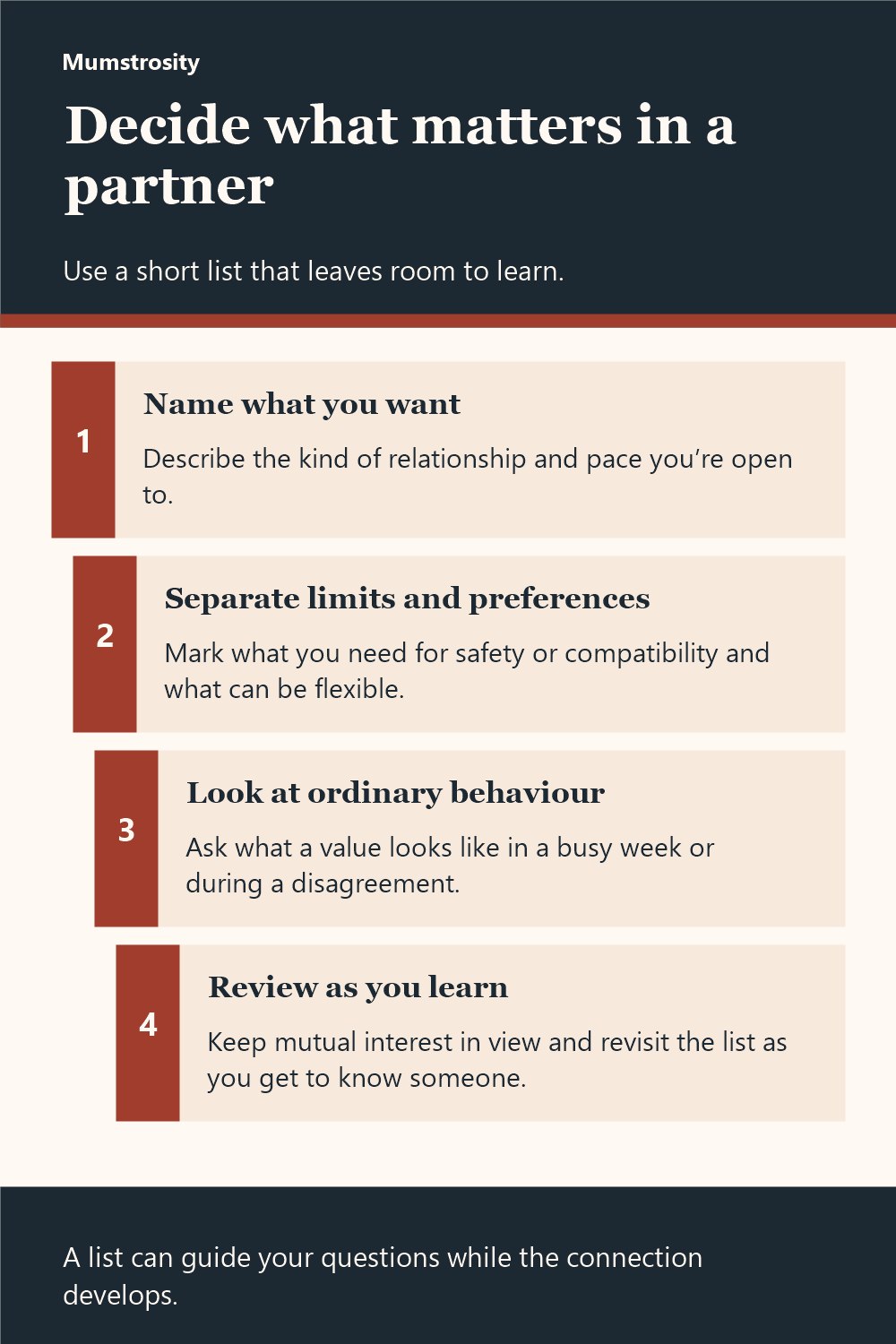
Decide what matters in a partner Use a short list that leaves room to learn.
- Name what you want Describe the kind of relationship and pace you’re open to.
- Separate limits and preferences Mark what you need for safety or compatibility and what can be flexible.
- Look at ordinary behaviour Ask what a value looks like in a busy week or during a disagreement.
- Review as you learn Keep mutual interest in view and revisit the list as you get to know someone.
A list can guide your questions while the connection develops.