

Wondering whether he wants more than friendship can leave you replaying messages and small moments. An invitation, a compliment or a warm conversation may suggest interest, but none can tell you exactly what someone feels or wants. You can notice a pattern and ask a clear question without turning dating into detective work.
This guide uses “he” because that is the question you may be asking. People of any gender can be uncertain, direct, shy or inconsistent. Look at this person’s choices and your own comfort rather than assuming men and women follow different rules.
On this page
1. Notice whether making time is shared
Does he sometimes start a conversation, suggest a plan or follow up when a plan changes? Shared effort can make getting to know someone feel more balanced. It does not have to mean equal numbers of messages or identical ways of showing attention.
Work, caring responsibilities, disability, privacy and communication preferences can affect contact. A late message is not automatically a sexual invitation, and a slow reply is not proof of rejection. If the arrangement leaves you guessing, ask what kind of contact is realistic rather than deciding what every delay means.
2. Keep body language in perspective
Eye contact, smiling, remembering details or sitting nearby can have several meanings. Someone may be friendly, attracted, distracted or simply comfortable in that setting. A person who avoids eye contact or dislikes touch may still enjoy your company.
Do not test attraction by moving into someone’s space or touching them to see whether they pull away. Ask before physical contact and leave room for an easy refusal. Love is respect’s guidance on physical boundaries explains that each person decides what they are ready for; affection is never owed.
3. Separate romantic interest from respectful treatment
Someone can feel attracted to you and still want a different kind of connection. Flirting does not establish exclusivity, a relationship or a promise about the future. Talking about a trip together is an idea until you both agree what it means and make workable plans.
Consider whether you can decline, disagree and keep interests of your own. Teasing that hurts does not become caring because someone calls it flirting. You can ask for it to stop without first working out whether he likes you. Respect matters in friendship, casual dating and a committed partnership.
4. Ask a question that makes room for either answer
If you want to date, try a straightforward invitation: “I enjoy spending time with you. Would you like to go for coffee as a date?” Choosing a specific, affordable plan can make the invitation easier to understand without creating an obligation.
If you are already seeing each other, ask about the arrangement: “I would like to keep dating and explore a relationship. What are you looking for?” You do not need a perfect speech. Choose a private enough, comfortable setting or a message if that suits the situation, and avoid demanding an immediate declaration.
5. Hear the answer without negotiating attraction
A clear no deserves acceptance. You can feel disappointed and take some space without trying to persuade him or treating friendship as a waiting room. If he is unsure, decide whether that uncertainty works for you rather than promising to wait indefinitely.
When words and behaviour keep conflicting, describe the practical effect: “Our plans often fall through, and this arrangement does not suit me.” You do not have to prove that someone is lying to stop dating them. A repeated lack of clarity can be enough information about what is available now.
6. Ask whether this connection suits you
It is easy to focus on being chosen and overlook whether you enjoy the time together. Do you want similar things? Can you be yourself? Does keeping in touch fit both lives? Being liked is only one part of deciding whether to continue.
Your next step might be an invitation, a conversation about expectations or a decision to step back. You can choose it without decoding every gesture or proving that you are attractive enough.
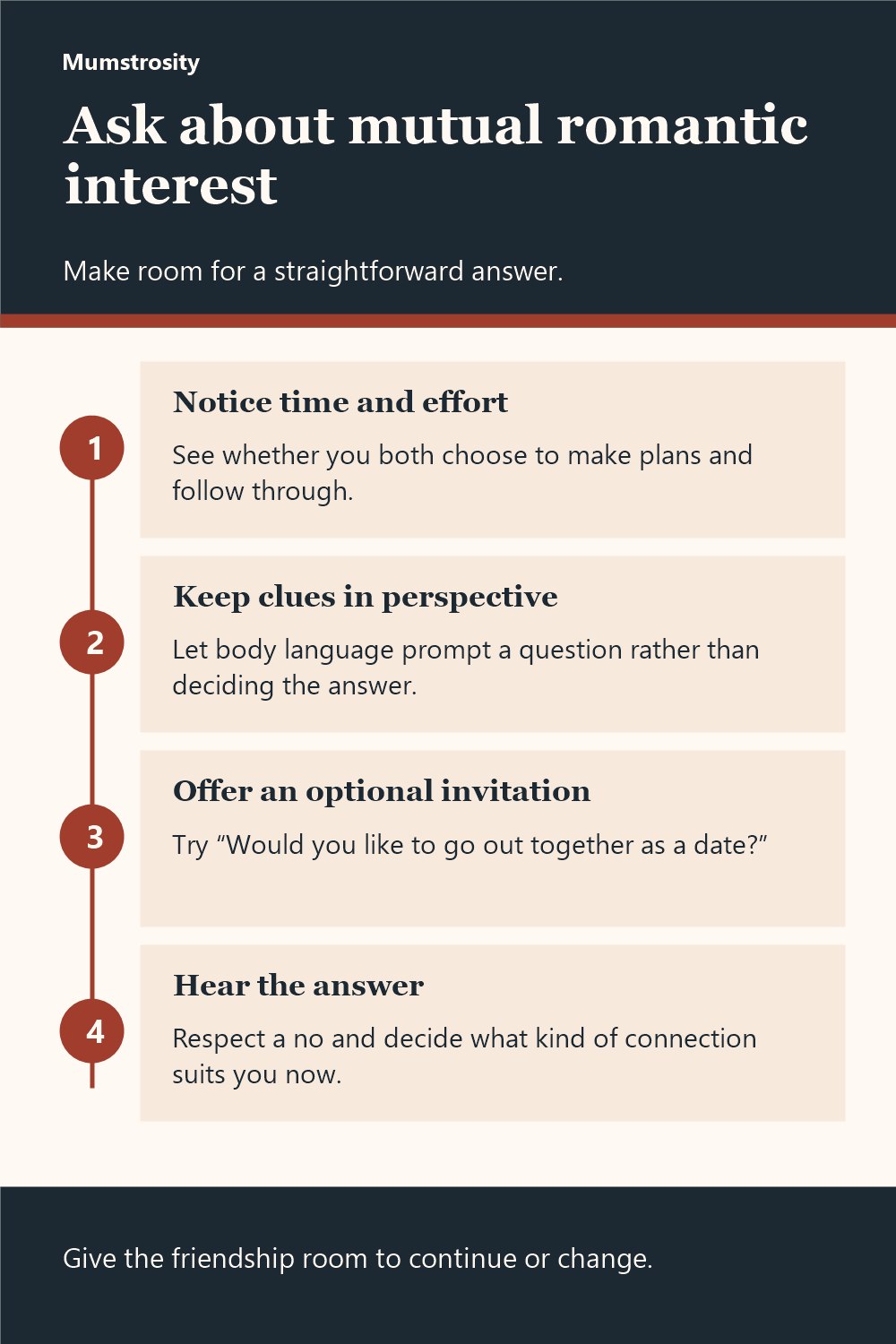
Read the infographic in text
Ask about mutual romantic interest Make room for a straightforward answer.
- Notice time and effort See whether you both choose to make plans and follow through.
- Keep clues in perspective Let body language prompt a question rather than deciding the answer.
- Offer an optional invitation Try “Would you like to go out together as a date?”
- Hear the answer Respect a no and decide what kind of connection suits you now.
Give the friendship room to continue or change.