

When the early excitement changes, you may miss a kind of closeness you once enjoyed. You might also feel tired, distant, uncertain or relieved to have more space. A change in feelings is a reason to pay attention, rather than proof that you must leave or work harder to stay.
Consider what has changed, whether both people want to explore it and what would make the relationship more workable. Effort can create opportunities for connection, but neither person can promise a particular feeling or carry the relationship alone.
On this page
1. Describe what you miss or want to change
“The spark has gone” can describe several different concerns. You may miss conversation, feel burdened by household work, want more time alone or question whether you still want this partnership. Name the detail before choosing a solution.
You might say, “I miss talking about things beyond our schedules,” or “I feel distant, and I want to understand whether we both want to work on this.” Leave room for an honest answer. A quieter routine can suit some couples, while another person may want something that the relationship cannot offer.
2. Share the practical effort of everyday life
Look at the time and energy available to each person. Work, parenting, caring responsibilities and domestic tasks may leave little room for enjoyable time together. Discuss the actual arrangement instead of assuming that a partner who seems tired has stopped caring.
Choose a concrete change you both consider fair, such as taking full responsibility for a recurring task or protecting a period of rest. The person taking on a task should also own its planning where possible. Another person should not have to manage every reminder before a shared plan happens.
Ask what care means to each of you now. Practical help, quiet company, conversation and affection can all matter in different ways. You can appreciate one kind of effort while explaining that you also miss another kind of connection.
3. Try time together that both people actually want
Suggest one manageable activity: a walk, cooking something simple, playing a game or listening to music together. Choose for interest, accessibility and cost. An ordinary hour can offer more room to talk than an expensive plan that adds pressure.
Keep the invitation optional. You do not have to manufacture excitement or make every shared activity romantic. Notice whether you enjoy the time and whether both people help make it possible. Keep space for individual friendships and interests as well.
4. Talk about affection and intimacy without pressure
Ask what kinds of touch or closeness each person wants, rather than assuming that more sex will repair distance. Affection might include a hug, holding hands, sitting together or a conversation. It may also mean respecting someone’s wish not to be touched.
The guidance on physical boundaries from love is respect makes clear that intimacy is not owed. No stage of a relationship creates an obligation to have sex. If your preferences differ, discuss what is comfortable and compatible without treating consent as something to negotiate away.
5. Make appreciation and requests specific
If you value something your partner did, say what it was: “Thank you for handling that appointment,” or “I liked having time to talk yesterday.” Appreciation does not need gifts, a daily quota or a particular appearance. It should leave room for real concerns too.
Ask before offering touch, favours or a surprise plan. A gesture is more useful when the other person wants it, and it does not cancel a problem you need to address. Neither person should have to perform constant cheerfulness or give more than they can manage to keep the relationship going.
6. Review what is changing and what you want next
If you both want to try a change, agree when to talk about how it went. Ask whether it actually happened, whether the effort felt shared and whether either person’s wishes have become clearer. A review is a conversation, not a test that you must pass by feeling more in love.
You might adjust your plans, seek suitable support or decide to end the relationship. Where threats, fear or control are present, seek individual safety support before trying joint problem-solving. You can acknowledge care and history without promising to stay, and you do not have to be certain about every feeling before asking for help.
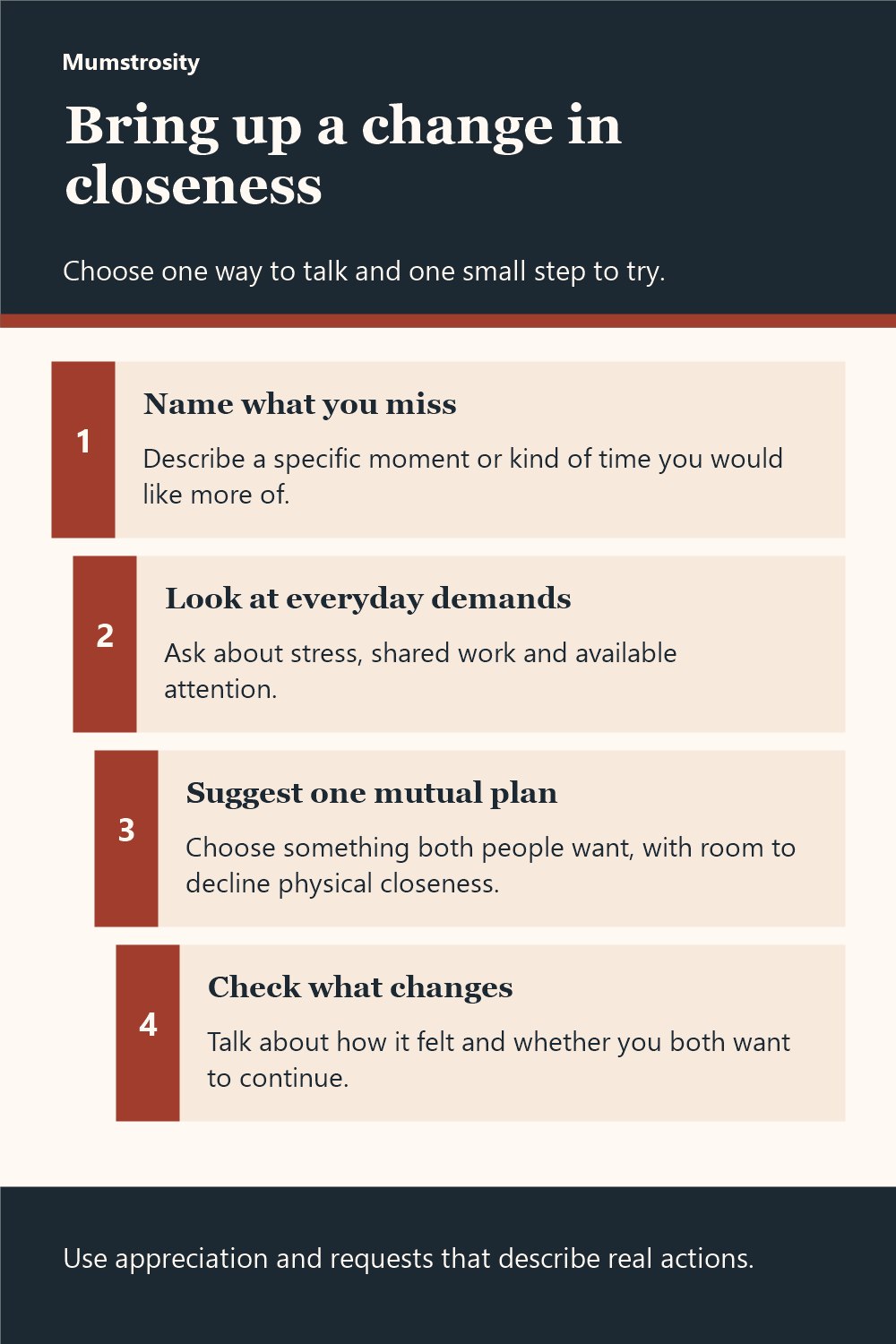
Read the infographic in text
Bring up a change in closeness Choose one way to talk and one small step to try.
- Name what you miss Describe a specific moment or kind of time you would like more of.
- Look at everyday demands Ask about stress, shared work and available attention.
- Suggest one mutual plan Choose something both people want, with room to decline physical closeness.
- Check what changes Talk about how it felt and whether you both want to continue.
Use appreciation and requests that describe real actions.