

Moving in together changes more than where you spend the night. It affects time, space, bills, household work and the practical choices available to each person. A useful conversation leaves room for excitement and for the details that could otherwise become assumptions.
There is no single relationship timetable that makes a shared home the right next step. Use these six conversations to decide what you both want and what needs to be clear before you make a commitment.
On this page
1. Why do we want to share a home?
Talk about the change each of you hopes to make. You may want more ordinary time together, a shorter commute or a different living arrangement. Check whether both people want the move itself rather than using it as a way to secure an answer about the relationship.
Practical pressure can affect the choice. If money, housing or a deadline is pushing you toward a quick decision, name that constraint and consider any other realistic options. Sharing an address does not automatically resolve an existing conflict.
2. What are we actually agreeing to?
Discuss time alone, overnight guests, belongings, pets, working hours and privacy. Decide which spaces are shared and which permissions still need to be asked for. Access to a home does not create unrestricted access to a person’s messages or devices.
Explain what the move means for your future intentions too. Cohabitation, exclusivity, marriage and having children are different decisions. If your expectations differ, discuss that before treating the move as a promise neither person has clearly made.
3. How will bills, money and paperwork work?
List the main costs, decide who will pay what and agree how you will keep track. Include irregular expenses and what you would do if someone’s income changed. A split that looks equal on paper may not feel workable with different resources or responsibilities.
MoneyHelper’s guide to talking about money suggests beginning with a manageable budget and discussing priorities. Keep the conversation practical, and leave each person able to understand the arrangement before agreeing to it.
Housing, ownership, debt and inheritance rules depend on your location and circumstances. For readers in England, Citizens Advice explains differences between living together and marriage. Get independent local legal or housing advice about your own documents before signing or guaranteeing a commitment you do not understand.
4. How will we share household work?
Include planning as well as doing: noticing supplies, arranging repairs, preparing meals and remembering appointments. Agree who will own each task rather than leaving one person to keep asking for help.
Talk about standards and available time. A plan can change during illness, busy work periods or caring responsibilities. Arrange a way to review the workload so that temporary adjustments do not quietly become a permanent expectation.
5. What do we want around intimacy and family plans?
Discuss whether children are part of either person’s plans and any questions you need to explore about reproductive choices or sexual health. Qualified healthcare support can help with individual clinical questions.
Sharing a home does not mean that either person owes touch or sex. love is respect’s physical-boundaries guidance emphasizes personal readiness and the ability to set limits. Keep checking what each person wants; previous intimacy or a living arrangement is not consent to another occasion.
6. How will we review the arrangement or change course?
Agree how to raise concerns and what practical information either person would need if the arrangement changed. Consider possessions, bills, documents and housing options. Planning for a possible change does not mean expecting the relationship to fail.
Choose a time to check how shared life is working. A review is a chance to make choices clearer, not an automatic deadline for marriage or a demand that someone continue an arrangement they no longer want.
You can decide to move, wait, choose a smaller change or keep separate homes. The useful outcome is an informed agreement both people can freely make, with practical details that are understood rather than left to hope.
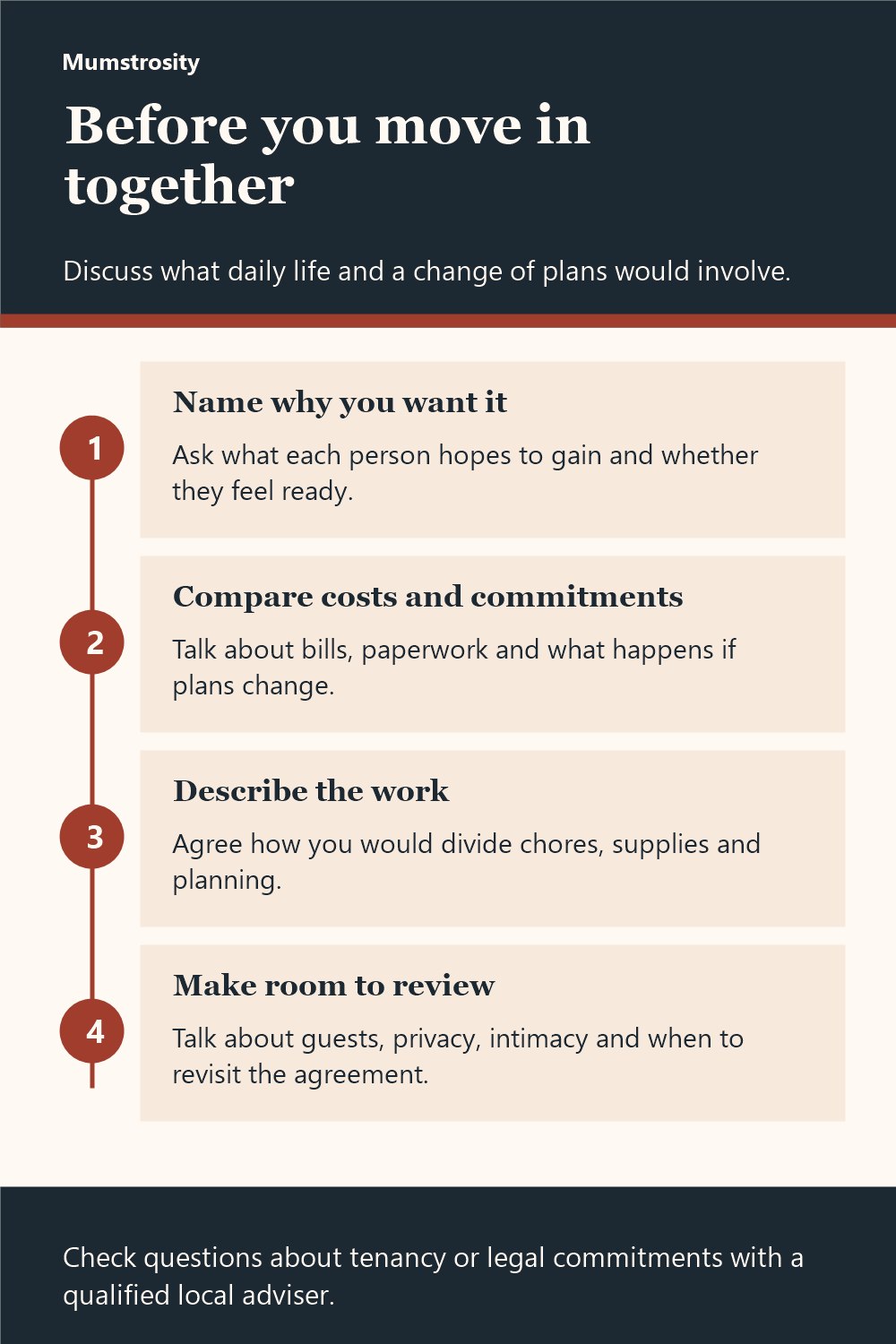
Read the infographic in text
Before you move in together Discuss what daily life and a change of plans would involve.
- Name why you want it Ask what each person hopes to gain and whether they feel ready.
- Compare costs and commitments Talk about bills, paperwork and what happens if plans change.
- Describe the work Agree how you would divide chores, supplies and planning.
- Make room to review Talk about guests, privacy, intimacy and when to revisit the agreement.
Check questions about tenancy or legal commitments with a qualified local adviser.