

It can be exciting to spend more time with someone new. You may find yourself rearranging plans or thinking about them often. Enjoying a relationship does not mean you have done something wrong, and wanting closeness does not make you a burden.
The aim is to make room for the relationship alongside the rest of your life. These eight ideas can help you notice what you want to keep, what you are choosing to change and whether both people have a voice.
On this page
- Keep a few routines that matter to you
- Talk about time together rather than guessing
- Stay connected with people beyond the relationship
- Let interests remain yours
- Agree on digital space and privacy
- Allow support without demanding complete self-sufficiency
- Notice how your partner responds to your choices
- Review what is working for you now
1. Keep a few routines that matter to you
Choose a small number of commitments you want to protect: regular sleep, a class, time with a friend or a quiet evening. You do not need to preserve every old habit or divide your time by a formula. Start with the things that help your days feel workable.
Be clear when you make plans: “I’m busy on Tuesday, but I’d like to see you on Friday.” An existing commitment does not need to become an apology for caring less.
2. Talk about time together rather than guessing
You may want different amounts of contact. Ask what feels comfortable now, including how much notice you need for plans and when you expect to be unavailable. A difference is something to discuss, not proof that one person is needy or the other uncaring.
Look for an arrangement both people want to try. If it repeatedly leaves one person disappointed, you can revisit it or consider whether your preferences fit.
3. Stay connected with people beyond the relationship
Keep in touch with friends, relatives or other trusted people you value. Different relationships can offer different kinds of companionship and support. You do not have to make your partner the source of every conversation, interest or practical need.
If you have drifted from someone, you can reach out without predicting that they will reject you. A simple message acknowledging the gap may be a place to begin. Their response remains their choice.
4. Let interests remain yours
You can enjoy a partner’s hobby without giving up your own. You can also decline an activity or try something once and decide it is not for you. Sharing an interest should be an invitation, not a requirement to become more alike.
Ask whether a change feels chosen or necessary to avoid someone’s displeasure. There is room for separate tastes within a close relationship.
5. Agree on digital space and privacy
Discuss messages, photos and online posts rather than assuming that closeness means constant availability. You might prefer not to text during work or want to agree before a photo of you is posted.
Love is respect’s digital-boundaries guide includes questions about online contact and keeping account access private. A relationship does not require sharing passwords or allowing someone to monitor your conversations.
6. Allow support without demanding complete self-sufficiency
People sometimes need help, including from a partner. Illness, disability, caring responsibilities or a difficult period can affect what you can do alone. Needing support does not make you unworthy of a relationship.
Where possible, discuss the kind of help wanted, what each person can offer and what other support is available. Mutual consideration matters more than proving that you never rely on anyone.
7. Notice how your partner responds to your choices
A partner can miss you or feel disappointed while still respecting your plans. Threats, punishment, humiliation or attempts to cut you off from other people deserve a different response from an ordinary disagreement about time.
If you feel frightened or controlled, get private support from a trusted person or domestic abuse service before arranging a confrontation. You do not need to earn independence by explaining every choice well enough.
8. Review what is working for you now
Ask yourself whether the relationship leaves room for rest, commitments and interests you care about. Notice what you enjoy as well as what feels strained. A busy week may need a practical adjustment; a recurring pattern may need a larger conversation.
You do not have to decide the entire future at once. Try one change, then see whether it helps. You can value closeness while continuing to have wishes, plans and a voice of your own.
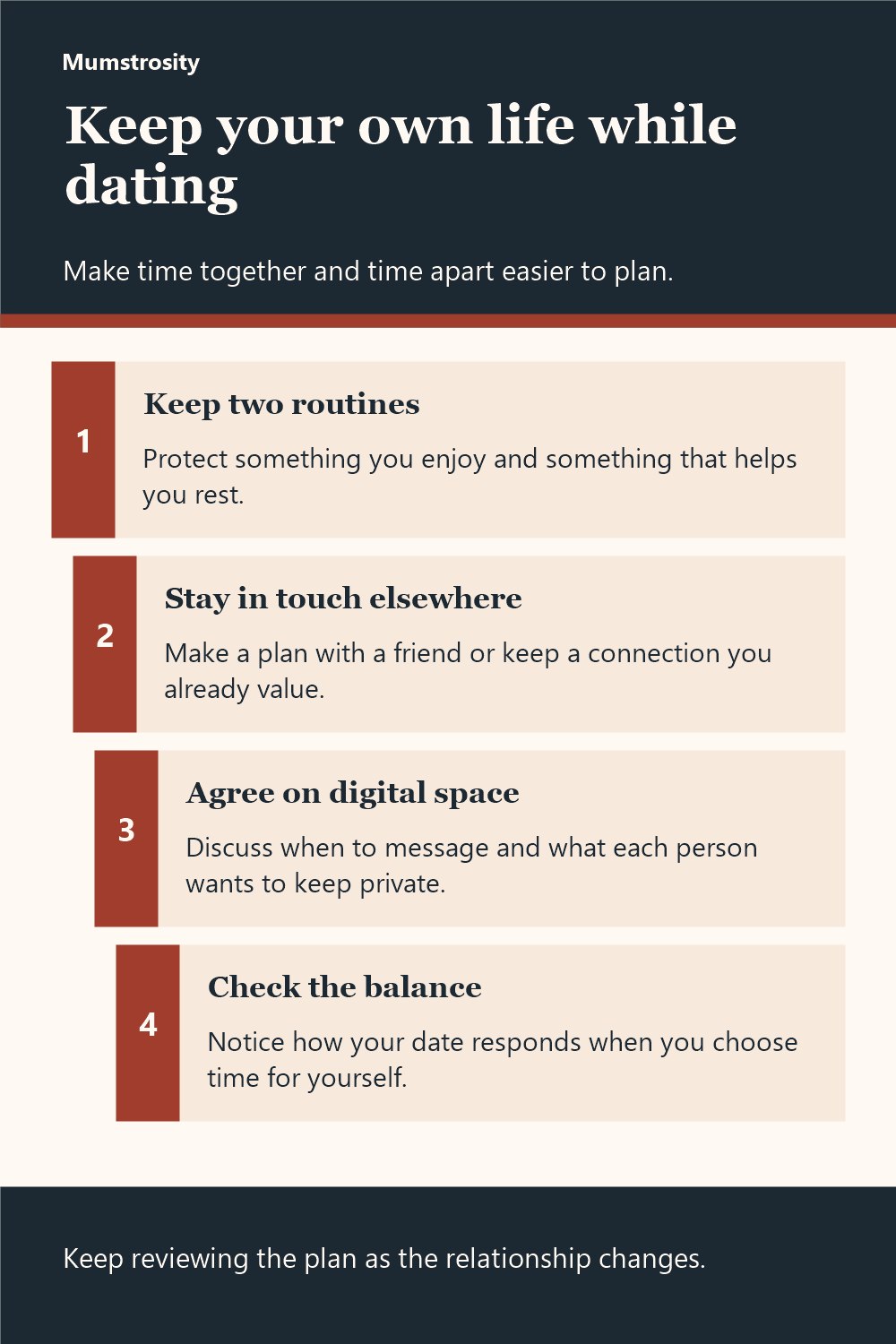
Read the infographic in text
Keep your own life while dating Make time together and time apart easier to plan.
- Keep two routines Protect something you enjoy and something that helps you rest.
- Stay in touch elsewhere Make a plan with a friend or keep a connection you already value.
- Agree on digital space Discuss when to message and what each person wants to keep private.
- Check the balance Notice how your date responds when you choose time for yourself.
Keep reviewing the plan as the relationship changes.