

A difficult relationship is not always easy to describe. You may notice repeated pressure, feel that your needs have little space or discover that you and your partner want different futures. Looking at specific patterns can be more useful than fitting someone into a label such as “selfish” or “afraid of commitment.”
Use the questions below to separate a difference you can discuss from treatment that limits your freedom or safety. You can seek support or decide a relationship does not fit without proving what another person intends.
On this page
1. Can both people make a free choice?
A request leaves room for an answer. Repeated guilt, punishment or threats can make an apparent agreement feel like the only safe option. Notice what happens when you decline a plan, want time apart or make a decision the other person dislikes.
The National Domestic Violence Hotline’s warning-signs guide includes isolation, intimidation, controlling money and pressure around sex. You do not have to wait for physical violence to take a concern seriously or ask for help.
2. Is there room for both people’s needs?
Relationships can include periods when one person needs more support, such as during illness or a family crisis. That does not make them an unsuitable partner. Consider whether there is also room for your limits and whether the arrangement can be discussed.
Being a supportive partner does not mean becoming someone’s only source of help. Friendships, community and appropriate professional support can all have a place. Ask what each person can offer rather than expecting one relationship to meet every emotional or practical need.
3. What do I know, and what am I assuming?
If something has damaged trust, describe the event and what remains unclear. A direct question is more useful than treating jealousy as evidence or secretly checking a partner’s accounts. You can choose what information you need to make a decision without claiming access to every private conversation.
Contact with an ex is not automatically a sign of dishonesty. People may share parenting responsibilities, friendships or other commitments. Discuss what contact means in your situation and any agreements you want; neither a blanket ban nor an unspoken assumption creates mutual understanding.
4. Are we hoping for different kinds of commitment?
One person may want exclusivity or a shared home while the other does not. A difference can be painful without making either person defective. Ask what is wanted now and decide whether that fits your own plans.
You do not have to keep waiting because the relationship might eventually become something else. Equally, pressure will not create a freely chosen commitment. Be clear about what you want to continue, change or step back from after hearing the answer.
5. Does a concern lead to change?
Disagreement alone does not decide whether a relationship can work. Notice whether both people can speak, hear a concern and take responsibility for specific actions. An affectionate gesture or an apology does not automatically settle an issue that keeps happening.
If you agree to try a change, make it concrete. “We will share responsibility for planning meals” can be reviewed more clearly than “We will try harder.” Ask what actually happened and how it affected each person, without turning the review into a contest.
6. What would help me choose my next step?
You might want a conversation, more time, a different arrangement or an end to the relationship. Consider the information and practical support you need. It is reasonable to take someone’s wishes seriously while recognizing that you want something different.
If you fear retaliation, threats or violence, prioritize individual support and safety planning over a direct confrontation. A trusted person or local domestic-abuse service can help you explore options. In immediate danger, contact your local emergency service when it is safe to do so.
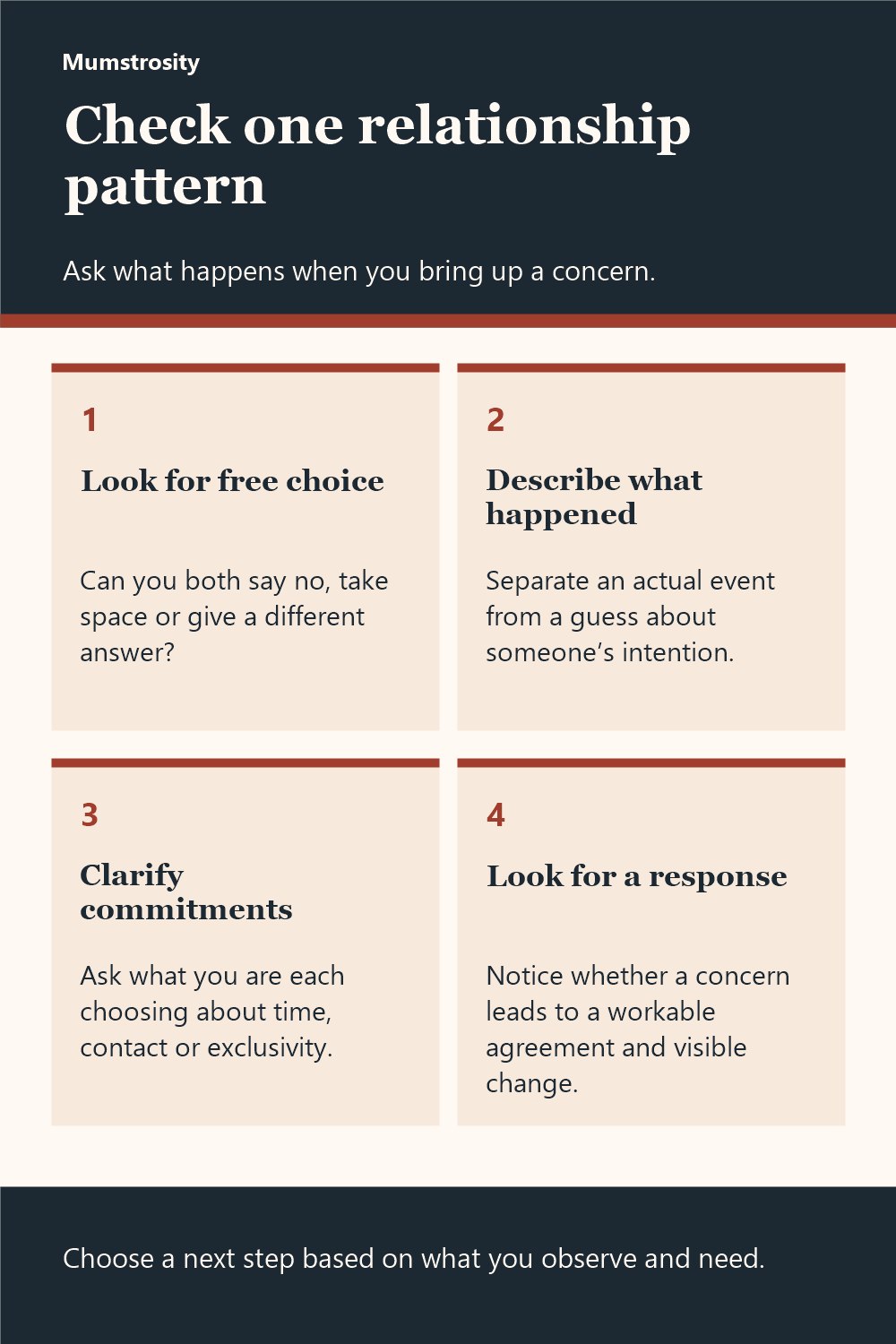
Read the infographic in text
Check one relationship pattern Ask what happens when you bring up a concern.
- Look for free choice Can you both say no, take space or give a different answer?
- Describe what happened Separate an actual event from a guess about someone’s intention.
- Clarify commitments Ask what you are each choosing about time, contact or exclusivity.
- Look for a response Notice whether a concern leads to a workable agreement and visible change.
Choose a next step based on what you observe and need.